


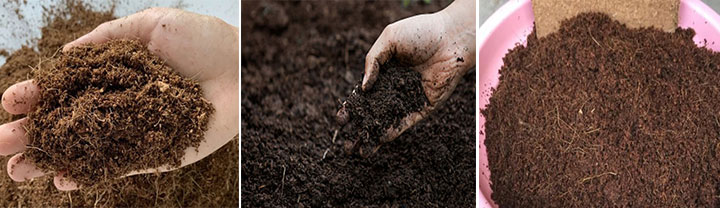
Coconut peat, also known as coir, contains coconut fiber, which easily clogs pores. Wet coir is also highly sticky and prone to clumping; dry coir is lightweight and easily dispersed. A coconut peat sieve testing machine can analyze the particle composition, fiber content, and proportion of different particle sizes in coir, thus determining the appropriate sieve mesh size and material for subsequent batch screening, and adjusting the crushing process or mixing ratio.
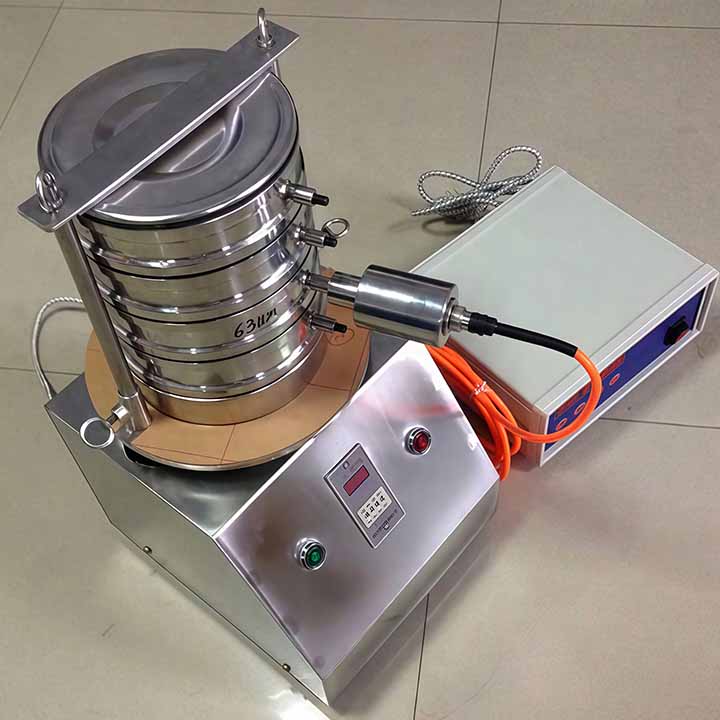
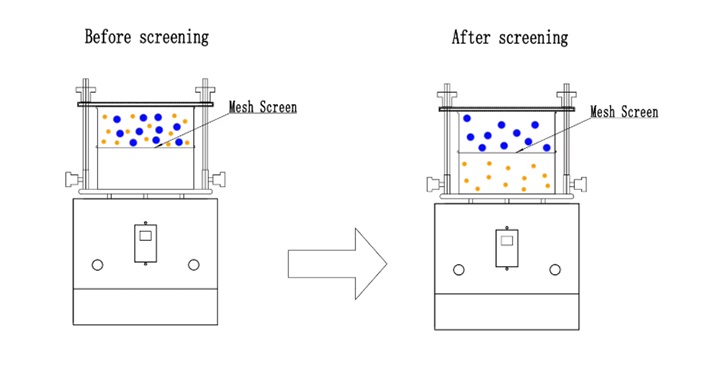
After the coconut peat sample is placed into the top sieve frame of the sieve testing machine, the coir particles continuously tumble, bounce, and diffuse on the sieve. Smaller particles fall layer by layer, while coarser particles and long fibers remain in their corresponding sieve layers. During on-site observation, it can be seen that the coir does not simply move left and right, but rather forms a rotating and diffused state on the sieve surface. This movement trajectory ensures that the particles continuously contact the sieve openings, improving the uniformity of the screening process. For testing coir with high moisture content, a wet screening method can also be used, using water flow to assist in particle separation.
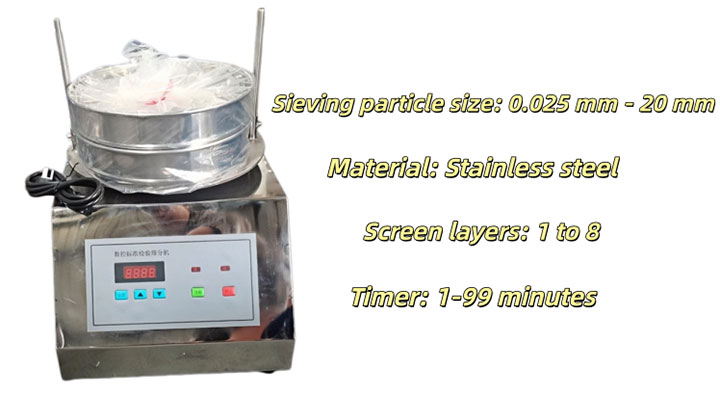
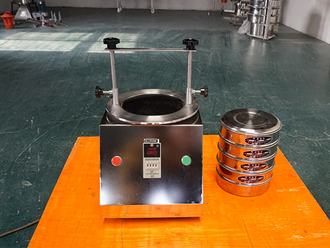
The coconut peat sieve testing machine boasts high grading accuracy and repeatability. It operates according to a set vibration frequency and time, eliminating subjective errors caused by manual sieving and providing reliable data support for production line formula adjustments. The machine has anti-clogging capabilities; addressing the common problem of coconut coir fibers easily tangling and clogging the mesh, the machine can be equipped with an ultrasonic mesh cleaning system. This system uses high-frequency vibration or physical impact to break the fiber tension, ensuring that fine coconut coir particles can pass through the mesh smoothly. The machine also has the ability to simultaneously grade multiple layers. Within a sealed sieve array, 1 to 8 layers of standard sieve frames with different mesh sizes can be stacked simultaneously. This means that a single operation can separate coconut coir samples into multiple different particle sizes, greatly improving testing efficiency. The machine has a compact design, extremely low operating noise (typically below 50 decibels), and is equipped with an intelligent time relay. Operators can precisely set the running time, such as 1-99 minutes, and the machine automatically stops at the designated time, achieving intelligent and convenient operation.
| Model | Sieve Frame Dia. | Layer Capacity | Noise Level | Timer Range | Power Supply |
|---|---|---|---|---|---|
| DH-200 | 200 mm | 1 - 8 Layers | < 50 dB | 0 - 99 mins | 110V/220V/380V (Customized) |
| DH-300 | 300 mm | 1 - 8 Layers | < 50 dB | 0 - 99 mins | 110V/220V/380V (Customized) |
In industrial testing and laboratory analysis, several common types of coconut peat sieve testing machines have emerged to meet different coconut coir conditions and testing standards.
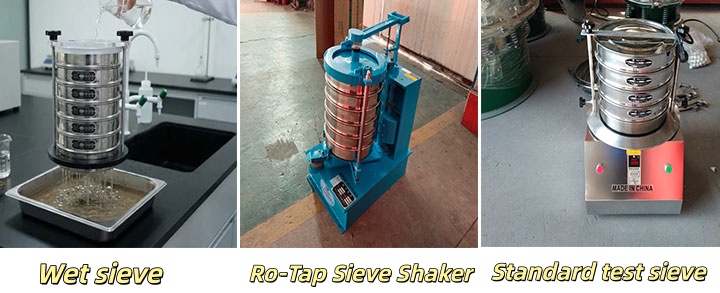
1. Standard Lab Vibratory Sieve Shaker: The most common type, using a standard 200mm or 300mm stainless steel sieve frame to quickly grade dry coconut coir through three-dimensional vibration. It is standard equipment in quality control departments.
2. Sonic Sifter / Wet Sieve Machine: When dealing with wet coconut coir with extremely high moisture content and a tendency to clump, ordinary dry sieving often causes material to clump and fail to pass through the screen. This type of machine allows water to be added during sieving, separating the wet coconut coir particles under combined hydraulic and vibration forces.
3. Lab Ro-Tap Sieve Shaker: When a sample contains a large amount of long coconut fibers, the Ro-Tap model is chosen. It combines reciprocating vibration with top tapping, helping loosen and separate tangled fibers.
| Sieve No. | Sieve Opening (mm) | Sieve Opening (μm) | Particle Size Description |
| 1 | 12.5 mm | 12500 μm | Coarse fiber, uncrushed lumpy material |
| 2 | 8.0 mm | 8000 μm | Extra coarse particles |
| 3 | 6.3 mm | 6300 μm | Coarse particles |
| 4 | 4.75 mm | 4750 μm | Large particles |
| 5 | 2.80 mm | 2800 μm | Medium-coarse particles |
| 6 | 2.00 mm | 2000 μm | Medium particles |
| 7 | 1.40 mm | 1400 μm | Medium-fine particles |
| 8 | 1.00 mm | 1000 μm | Fine particles |
| 9 | 0.71 mm | 710 μm | Relatively fine particles |
| 10 | 0.50 mm | 500 μm | Fine powder grade |
| 11 | 0.25 mm | 250 μm | Superfine powder |
| Pan (Bottom) | <0.25 mm | <250 μm | Dust and ultra-fine particles |
| Grade | Particle Size Range |
| Coarse Coconut Coir | > 6 mm |
| Medium Coarse | 2 – 6 mm |
| Medium | 0.5 – 2 mm |
| Fine Coconut Coir | 0.25 – 0.5 mm |
| Coconut Coir Dust | < 0.25 mm |
Choosing the appropriate coconut peat sieve testing machine and configuring the precise sieve particle size for different application scenarios is key to successful sieving. Below are four common application scenarios and recommended sieve combinations:
We provide full laboratory test sieving systems with customized mesh sizes and anti-blinding solutions. Contact our engineers today for technical guidance and competitive factory pricing!
The coconut peat sieve testing machine, constructed with corrosion-resistant SUS304 stainless steel, utilizing a three-dimensional vibration principle and diverse sieve particle size configurations, solves the sieving challenges of coconut coir's high fiber content, tendency to clog pores, and tendency to clump. Scientific sample analysis on the testing machine allows technicians to accurately determine particle size distribution, providing crucial data support for large-scale production line equipment selection while ensuring product formula consistency.
A: You can equip the machine with an ultrasonic mesh cleaning system or use bouncing cleaning balls under the screen to break surface tension and clear tangled fibers automatically.
A: All standard laboratory test sieves for coconut peat are made of high-quality SUS304 or SUS316 stainless steel to prevent corrosion from wet or saline coir materials.


Address:China,Yanjin county forest park gate to the west 1000 meters north road.


 Online Chat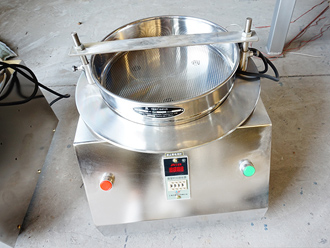

 Email
Email